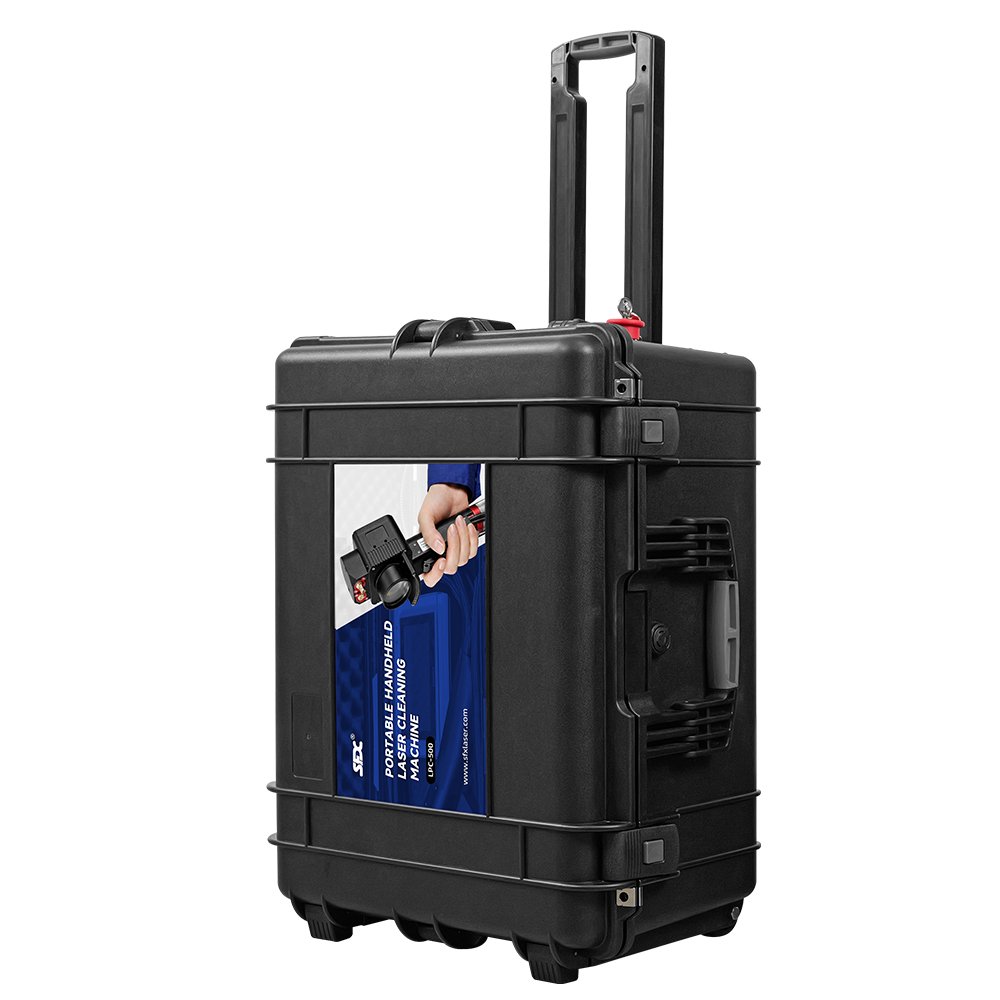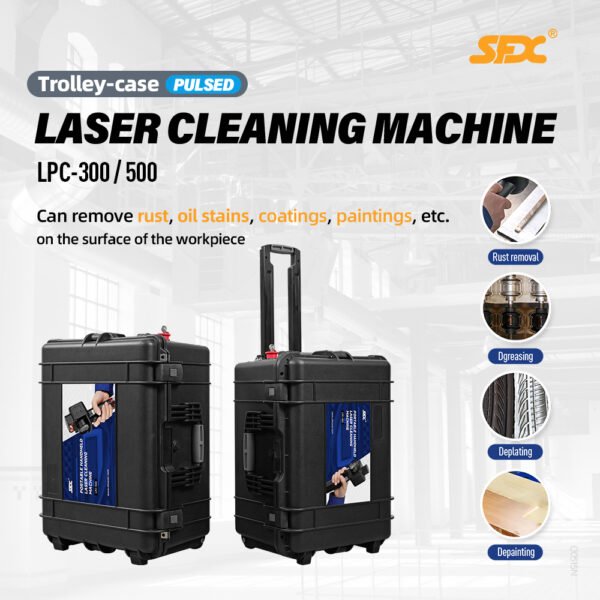

Laser cleaning machines are categorized into pulse and continuous types. Pulse lasers come in 200W, 300W, 500W, and 1000W, while continuous lasers offer 1500W, 2000W, and 3000W. For precise work requiring non-destructive substrate cleaning, like molds, pulsed lasers are ideal. However, for large steel structures, pipes, and similar items with high volume and rapid heat dissipation, continuous lasers are more suitable due to their lower substrate damage requirements.
The efficiency of the laser cleaner varies depending on the power output and attachment conditions. For example, a 1000W laser cleaner can clean 1.28 square meters per hour, while a 1500W laser cleaner can clean 2.75 square meters per hour. A 2000W laser cleaner can clean 9 square meters per hour. The efficiency difference can be significant, ranging from 15 to 45 square meters per hour.
The roughness of the painted surface of stainless steel cleaned with a continuous laser cleaner ranges from 0.638 to 2.433 micrometers, while the roughness of the surface of tungsten steel cleaned with a pulse laser cleaning machine ranges from 1.984 to 2.678 micrometers.
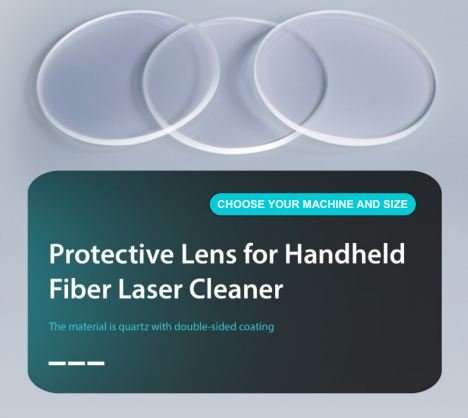
The expected service life of the laser typically ranges from 5 to 8 years. Consumables include a protective lens and regular water replacement. In winter, antifreeze should be added. Proper operation and cleaning will ensure the protective lens remains undamaged.
No. However, it can remove the blackening marks caused by welding around the seam, making it easier to paint later.
No, the laser will not damage the substrate. It absorbs energy very well on rust and painted surfaces, so you may see the rust catch fire. However, after the rust is cleaned, the substrate does not absorb the laser light enough to cause a fire, so the surface of the substrate remains undamaged.
Yes, laser cleaning offers several advantages over traditional sandblasting and shot blasting. The laser beam’s curved surface allows it to precisely fit into pipes, enabling thorough cleaning of edges and corners. This remote infrared focusing capability ensures that every area is effectively cleaned, regardless of its shape or location.
Laser cleaning machines work by ablating oxidized substances on surfaces, causing temperature increases. While continuous type machines have higher temperature rises compared to pulse and continuous types, they are generally suitable for large substrates and have faster heat dissipation.
The continuous type laser cleaning machine features a straight line, with adjustable length ranging from 10 to 160 millimeters, plus a tolerance of ±10 millimeters.
The pulsed laser cleaning machine offers seven customizable patterns: linear, rectangular, circular, sine, text, spiral, and Lissajous.
A comprehensive one-year warranty is provided for the whole machine, while a two-year warranty is offered for the laser source. It is important to note that consumables are not covered by warranty.
Under normal operating conditions, the machine can be used continuously for 8 to 12 hours per day without any issues. It has undergone rigorous testing, and no abnormalities have been detected.
While we maintain a comprehensive inventory of machines in stock, if your preferred model is not immediately available, we will process and fulfill your order promptly to ensure the shortest possible delivery time.
All machine prices include shipping costs, maintaining transparent pricing for customers around the world.
Indeed, a standard two-year warranty is provided for the laser source. Additionally, customers are offered technical support free of charge, including remote assistance and complimentary spare parts in the event of breakdowns.
Metals: Aluminium, Gold, Platinum, Brass, Tungsten, Carbide, Nickel, Stainless Steel, Chrome, Copper
Non-metals: Nylon, Light Button, ABS, PVC, PES, etc
SFX fiber laser engraver uses EZCAD2 (lightburn compatible) and EZCAD3 software, operating on any Windows system. Easy to use, it comes with an English user manual and video, along with customer and technical support, including remote assistance.
Mark: some metals, all glass, paper, fruits, wood, ceramic, garments
Mark and engrave: all plastics, some stones, leather
CO2 galvo lasers can cut or engrave non-metal materials such as wood, fruits, garments, leather, certain plastics, and others. While the power required for cutting materials is relatively low, the laser can engrave clear and fast materials like paper, garments, and light plastics.